

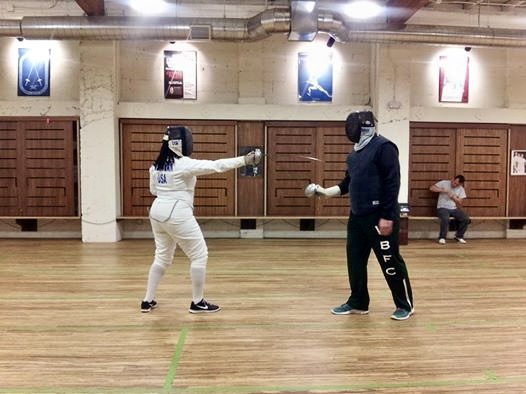
If you’ve ever fantasized about picking up the foil and swishing away vigorously at some varlet, hold tight. The reality of fencing is that you need lessons and practice in bouting. Lessons are training in theory and technique, but bouting is where you apply it. I spoke with Harriet Jernigan as part of Voices from the Row, our ongoing series of conversations with makers, writers, and other interesting people, about what a year of fencing lessons can yield, and the answers were startling. (Note: Harriet has been fencing for decades, but it’s never too late to begin.)
Understand Yourself
If you want to really understand yourself, pick up a foil. Obviously, you will quickly learn how well you take instruction, how you cope with feedback and frustration, how competitive you are, how you handle stress and conflict, setbacks and losing, breakthroughs and winning, and how your personality changes when you can hide behind a mask and hold a weapon.
If you dig deep and aren’t afraid of the answers, you can understand insecurities and from where they originate. Equally important, if you’re paying attention, and have a good coach and fencing club, I think you can learn so much that applies to life.
For one: avoid focusing on outcomes and focus instead on technique and process. As my coach of 18 years had taught me, good technique and good process lead to good outcomes. They build the foundation of your house. If your foundation is shaky, your house will collapse.
Winning isn’t everything
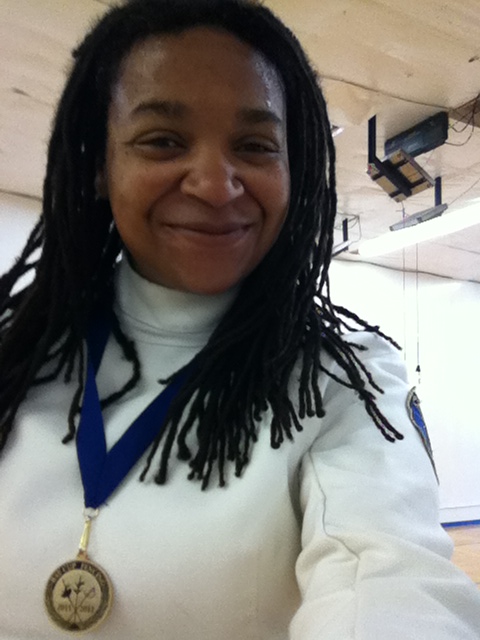
There is no better sport for learning that winning is not everything. It’s not even the primary thing for the first several years. Fencing is one of the losingest sports out there. 200 people show up to a tournament, and only one person wins. Learn to lose with grace and see a loss as a portal to discovery rather than an absence of a win. Winning does not determine your self worth. As another coach once told me, “The result is not the value of the day.”
There is great value in learning the importance of not always simply moving forward, but balancing between advancing and retreating. Advance too much and too quickly, and you’ll get nailed. Advance and retreat, getting a lay of the land, and you’ll almost always do better. Rushing headlong into anything is not a great idea.
Patience, Patience and more patience
Finally, you can learn patience. Patience is one of your greatest allies. It will carry you through natural plateaus, where you sit at a certain level without noticeable improvement for months at a time. You wonder if it will ever change. With patience, it does. And with (calculated) patience, you can achieve a good deal in life.
Read Harriet’s fascinating piece on vultures next!


