

An Academic’s Guide to Muttering Under Your Breath
I have a hypothesis that right after inventing the words “fire,” “run,” and “hungry,” hominids decided to workshop some expletives. They were makers and users of tools, and you don’t use a tool without busting a knuckle and getting creative with your linguistic expressions. In this extremely scientific post, we’ll be looking at cursing, swearing and profanity through the ages, and the very important social role it inhabits.
In Roman-era Bath, England (2nd to 4th century AD), people inscribed curses on thin sheets of lead or pewter and threw them into the sacred hot spring (Aquae Sulis) of the Goddess Sulis Minerva. These curse tablets, or defixiones, were pleas for divine justice: for Sulis Minerva to punish the evildoers. Most of the tablets were written in British Latin and contain details of the stolen property and requested punishment. The writing quality varies, suggesting they were made by individuals, many of whom were illiterate, so were simply scratches or marks.
About 130 of these tablets were discovered during the excavations of the Sacred Spring in 1979 and some of these tablets are on display at the Roman Baths Museum. The bloodthirstiness of the asks may seem a little out of proportion with the crimes.

For the theft of a bronze vessel, one asked that “it be filled with the blood of the thief.” One curse was written in British Celtic and is thought to be the only known example to survive in that language. (Side Quest: Sulis was a Celtic deity, and as we know, Romans often overlaid their own pantheon atop the locals’ goddesses and gods: hence Sulis Minerva.)

The above image shows:
- the curse is for someone who stole Vilbia (maybe a Celtic woman’s name?) and a list of ten possible suspects.
- curse for a person who stole a cloak and bathing tunic, and
- a list of names for the goddess to investigate.
The clergy at this facility likely made a good income from harvesting and sinking grievances in the sacred well. Believers probably rested better knowing that Sulis Minerva was on the case, and that transgression would be punished tenfold.
It makes me think about a period in my life when I wrote a letter and then burned it, watching the smoke and burnt paper float away into the sky. Facilitating (even if also capitalizing) on the cathartic practice of committing your grievances to paper (or lead tablet, or clay tablet, or slab of wood depending on the age and culture in which you dwell), is helpful to society. It’s a steam valve that prevents us from actually collecting the blood of our enemies.

“Solinus to the goddess Sulis Minerva. I give to your divinity and majesty my bathing tunic and cloak. Do not allow sleep or health to him…who has done me wrong, whether man or woman, whether slave or free, unless he reveals himself and brings those goods to your temple.”
Fast forward 1700 years…
While the denizens of Spinsters Row primarily speak English, many embrace anachronistic turns of phrase that could sound like another language. We have compiled this helpful primer so that you can determine whether that comment shouted at you was a greeting, an insult, or a curse. The terms curse, swear and cuss are often used interchangeably to describe profanity, but you can curse someone without being profane. It’s just less fun.
- May the moths find your cravats, actually means May you leave your favorite hoodie in an Uber.
- May your pudding turn to soot can be loosely translated to May your phone and headphones always be uncharged.
- Sling your hook, you rakefire! basically means Eat a dick.
Swear words are like curse macros. Don’t have time to holler a lengthy invective at someone in a passing carriage? Try some of these shortcuts. Instead of, “may you be crucified by being nailed to a cross,” try Gadzooks! Or Zooks! They’re shortened forms of “God’s Hooks!”
Another way to balance the humors of your liver, is to branch out in your name calling. Try stringing two or three of these together, next time someone cuts you off in traffic.

- Axwaddle: filthy or lazy person
- Bafflegabber: someone who tries to mislead with gibberish
- Blatherskite: fool
- Carpet-knight: a knight who has not known the hardships of the field, person bearing status or privilege not earned (see Nepo Baby)
- Crambazzle: a geezer (honestly, I wouldn’t be mad if someone yelled Crambazzle at me)
- Dunderhead: a thickheaded fool
- Dunderwhelp: same as above but specifically referring to a child
- Gandermooner: a man who cheats during his partner’s period
- Gulchin: gluttonous child (okay, who is making up insults for children?)
- Lobcock: large flaccid penis or a dull, boring person
- Mutton-thumper: either a bumbling bookbinder or a motherfucker, because context matters
- Nimgimmer: either a venereal surgeon or a motherfucker
- Ragabash: dirty, dishonest, slacker
- Slotterhodge: slobbish fool
- Smellsmock: sleazy, perverted man
- Snoutband: one who constantly interrupts other peoples conversations to contradict or correct them (see Reply Guy)
Write your own curses and oaths
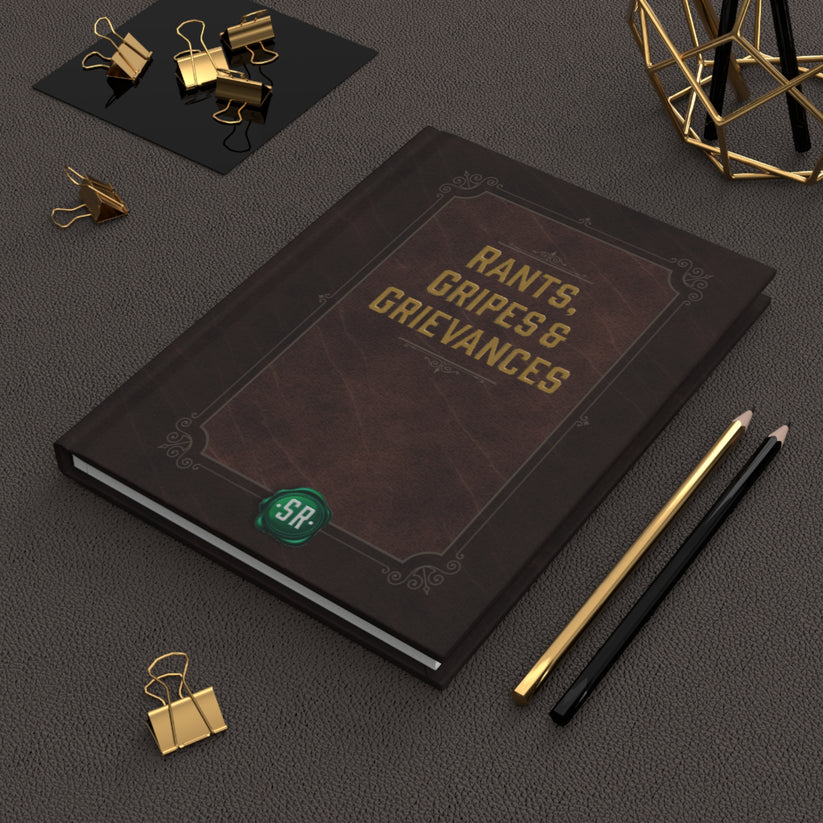
May we politely suggest a journal specifically for venting your spleen or workshopping your next linguistic attack, so it stands at the ready. Nothing is worse than thinking about what you could have yelled back, and coming up with the most devastating comment two days later. Be prepared.
Commit all the wrongs done to you into this tome of woe, journal through your rage, or jot down grocery lists. Either way, your furious scribbling in this notebook will raise eyebrows.