

In a world where first amendment rights are being infringed upon more and more everyday, exercising those rights becomes more than just a right, it becomes an act of defiance. It’s more than just the “right to free speech” it’s the cornerstone of our democracy, a safeguard built to protect dissent, diversity of thought, and the pursuit of truth. All great movements of forward progress in history began with people daring to think, speak and write freely and openly. Staying silent now is forgetting the past, and work done to give us our voice in the present.
A Brief History of Book Banning
Banning books is a way to control people and society and those in power have been banning books since people first started writing. Almost 2,000 years ago Roman emperor Caligula banned Homer’s The Oddessey because he “objected to the ideals of Greek freedom depicted”. And less than a century ago, the Hitler Youth regularly burned books as a way of erasing the contents. Most of these were written by prominent Jewish, liberal, and leftist writers.
Are Book Bans Legal?
The American Library Association (ALA) points out that the right to publish has been interpreted widely, multiple times, to protect from government attempts to suppress ideas and information or to forbid books, magazines, newspapers, art, film, music and the internet.
Why then, are we routinely hearing about “banning” books, music, movies and art?
Most bans that we hear about are local or maybe state wide. But in a 1982 supreme court ruling the court decided “local school boards have broad discretion in the management of school affairs” Essentially this means that you would have to prove the book is being banned for political reasons not for “aligning with community values”.
Who’s Behind Modern Book Bans?
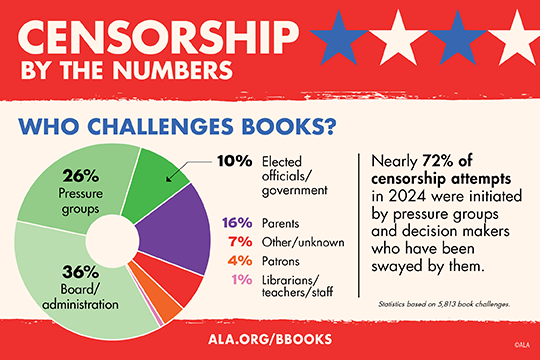
According to the 2025 The State of America’s Libraries, “The majority of book censorship attempts are now originating from well-funded, organized groups and movements long dedicated to curbing access to information and ideas. Pressure groups, elected officials, board members, and administrators initiated nearly 72% of demands to censor books in school and public libraries.”
This is not a case of parents wanting to ban access to books for their kids. These are people with agendas who want everyone to think like them, and want to limit what children, and adults alike have access to for learning and entertainment.
Common Reasons Books Get Banned
Throughout history there have been any number of reasons why books or writings have been banned. Common ones include political ideology and religious ideology. In recent years, while political and religious reasons still exist, some of the reasons have become…weirder. Some of the reasons for removing or banning books recently have included, Encouraging poor spelling, Depicting a “depressing view of life”, Supernatural themes, dealing with menstrual cycles and feminine hygiene, and encouraging disobedience. Can we ban executive orders based on causing a “depressing view of life”?
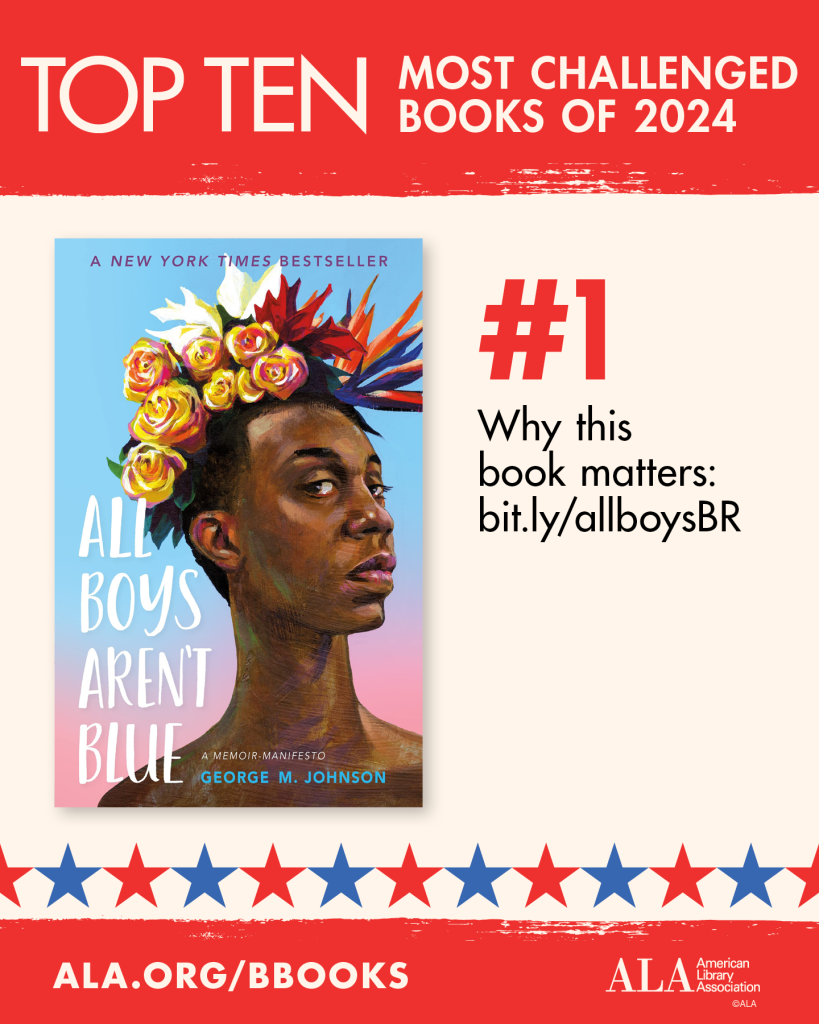
Top 10 Most Challenged Books of 2024
Every year, based on reports and media coverage, the ALA publishes the top ten most challenged books of the previous year. While this list is great, and designed to inform the public about censorship in libraries and schools, it isn’t exhaustive. Many book challenges are not reported or not covered by the news so this really represents only a snapshot of censorship attempts in libraries.
- All Boys Aren’t Blue by George M. Johnson
- Gender Queer: A Memoir by Maia Kobabe
- (TIE) The Bluest Eye by Toni Morrison
- (TIE) The Perks of Being a Wallflower by Stephen Chbosky
- Tricks by Ellen Hopkins
- (TIE) Looking for Alaska by John Green
- (TIE) Me and Earl and the Dying Girl by Jesse Andrews
- (TIE) Crank by Ellen Hopkins
- (TIE) Sold by Patricia McCormick
- Flamer by Mike Curato
Our Favorite Banned Books (and Why They Matter)
We couldn’t have a post about banned books, without looking at some of the ones that the residents of Spinsters Row love.
Teresa
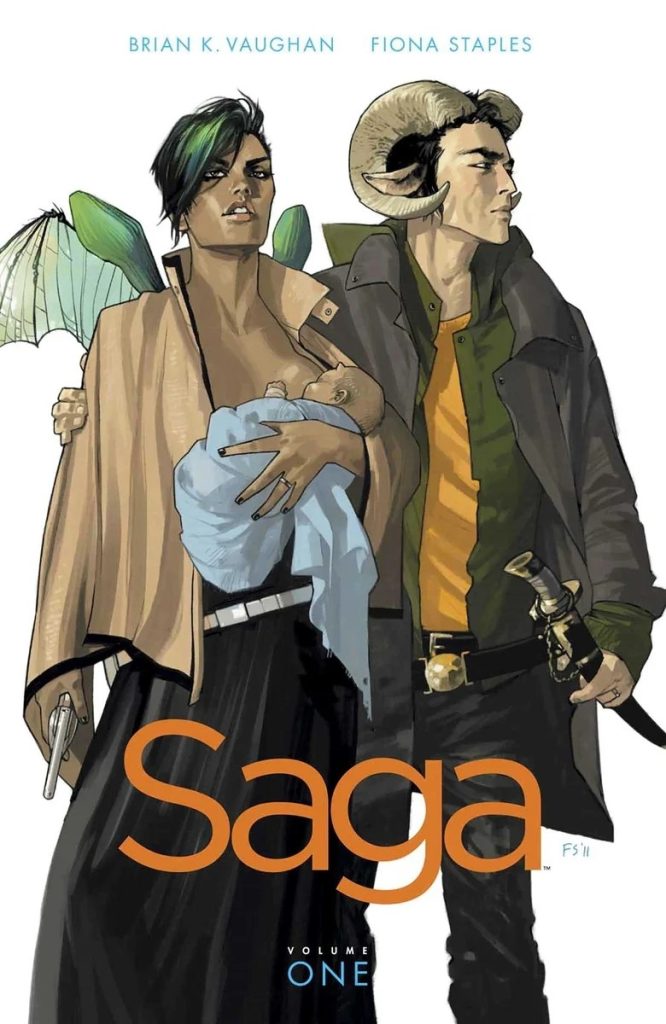
Saga is one of my favorite comic book series and space operas of all time. I would describe it as Romeo and Juliet in space, but that falls short. It’s a story with everything I love in spades: an epic story, incredibly vast world-building, characters so real and fully-formed they’ll make you cry, and of course, amazing artwork. Somehow, it’s banned for “promoting anti-family values,” which is absurd considering the entire premise of the series is that a husband and wife — Alana and Marko — are fleeing their homes in an intergalactic war to care for their newborn daughter, Hazel, and to give her a better life. How exactly is that anti-family? And plus, it feels criminal to hate on a series that has brought us the adorable Ghüs.

Angie
Earth’s Children Series. I followed the saga of Ayla and Whinney and Jondalar for thousands of pages beyond Clan of the Cave Bear. Imaging the period of time when Neanderthals and Homo Sapiens crossed paths and fought for resources was so fascinating to me. Storing seeds and berries, sewing hides and furs. Ayla was a primordial travel vlogger/craft babe with the best pets.
Sandy
It’s a 3-way tie for me between Where’s Waldo?, A light in the Attic, and Scary Stories to Tell in the Dark. All three of these books were such a part of growing up for me I can’t imagine what it would be like without them. Spending hours going hunting for Waldo with my friends, seeing who could spot him first, having sleepovers where we played light as a feather stiff as a board and read to each other scary stories, knowing they were going to give us nightmares, but not caring because we were having too much fun, and reading the fun, sometimes nonsensical poetry of Shel Silverstein and memorizing it for UIL poetry competitions.

Sue
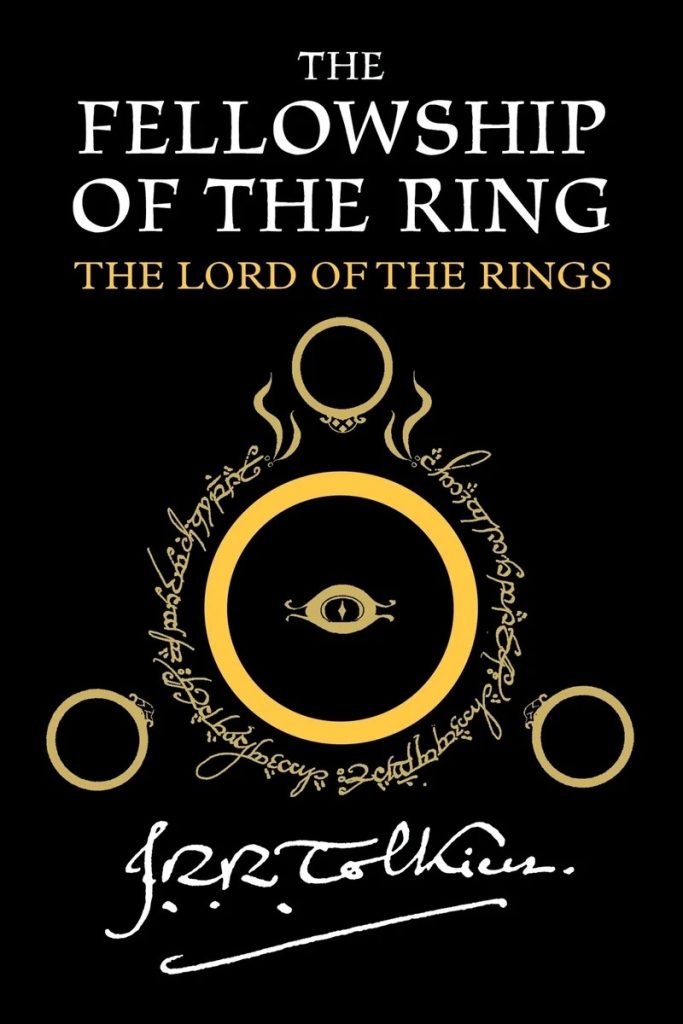
OMG, so many good ones on the list! I’m going to choose Lord of the Rings. In the forward from the author, Tolkien makes a comment to the effect of, “And yes, I agree with my critics, this book is too short”. I side-eyed the 1100+ page book thinking, are you crazy? But when I got done with the epic journey and delicious escape into Middle Earth, I thought,”No, he’s right, I really wish it was longer!” It’s the kind of book where you find yourself reading slowly just so you can drag out the experience a little bit longer. I read it at a time when I was traveling and there was a lot of time spent in the woods. I was imagining dwarves and elves around every corner. So fun! LOTR has it all, adventure, heroic battles between good and evil, friendships that stand the rest of time and humor, all in an incredibly vivid fantasy world. 10/10. So sad to think that kids are being deterred from reading.
Kristin
For me, so many books on the banned books list have served as vital torches that illuminate the conditions in this country and forewarn about what could come.
George Orwell’s depictions of authoritarianism and fascism are especially relevant today, as we are often expected to engage in doublethink and increasingly find ourselves at risk for “thoughtcrimes”—now, more than ever, based on the content we share on social media.
The “facts” themselves are also subject to change at the whim of a few or even a single individual, and who is an ally or an enemy changes by the day.
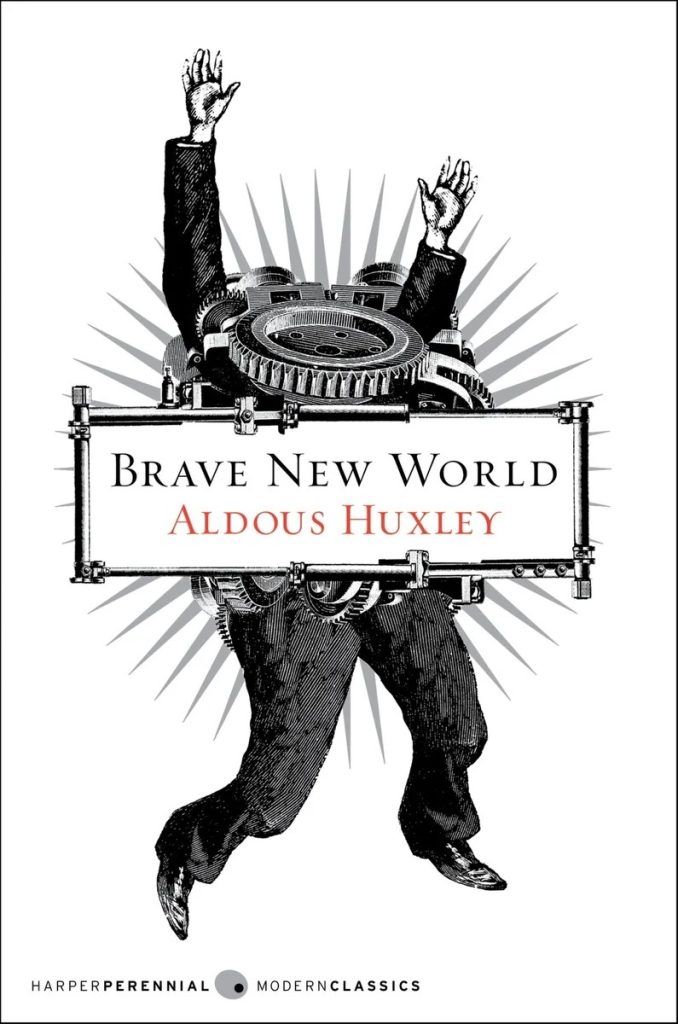
Authors such as James Baldwin, Maya Angelou, John Steinbeck, and Aldous Huxley have all played pivotal roles in shaping my understanding of race, sexuality, tenderness, power, independence, in/humanity, and gender.
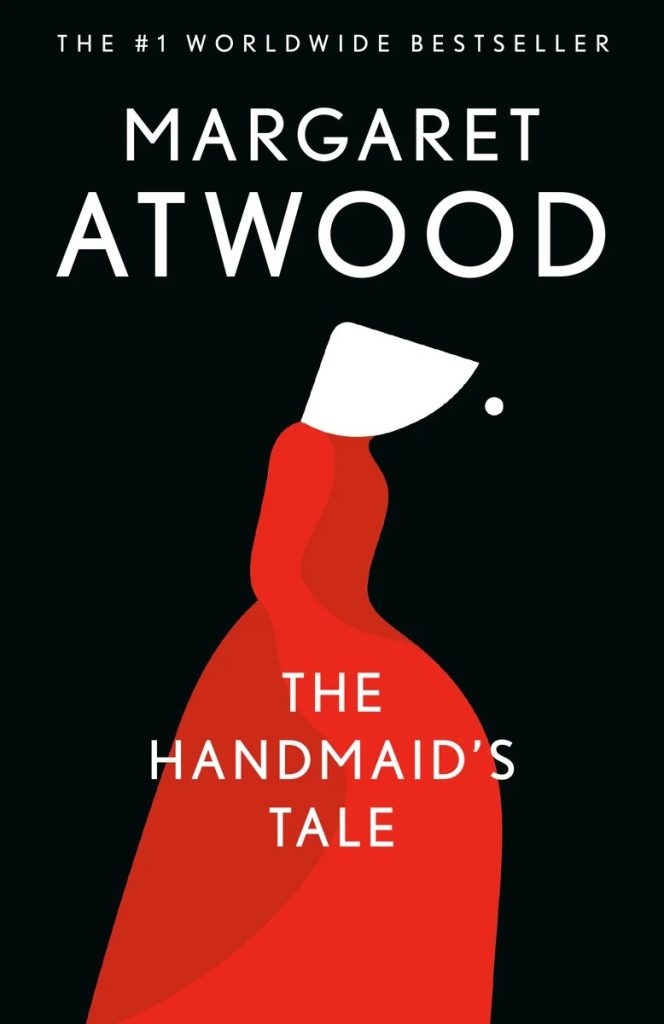
But if I had to choose just one author from the banned books list whose work resonated most with me, it would be Margaret Atwood. The Handmaid’s Tale and its sequel, The Testaments, speak profoundly to me—not simply because I re-read them most recently. While some may see The Handmaid’s Tale as pure fiction, in reality every human rights violation depicted within its pages has a precedent in historical fact. It served as a cautionary tale, when I first read it in the 1980s, and at this time, the examples of the deterioration of human rights, the advancement of surveillance, political and fervor based violence, the emphasis on the role of women as baby factories instead of autonomous human beings, all mirror things that we see playing out on a daily basis in the news. There is a scene in the Handmaids Tale where they send all of the women home from work, and transfer all of their assets to men, and this possibility has never seemed more plausible to me in this country. I can only take, possibly naively, some comfort in Atwood’s depiction of Mayday (the underground resistance) and the eventual downfall of authoritarianism and the restoration of an American Democracy that she depicts. I hope that we can also find our way.
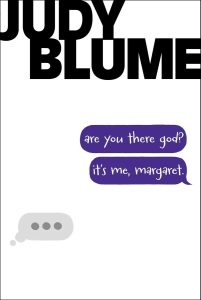
All the scared girls who this book helped
Gotta go with Are You There God? It’s Me Margaret. Because if you are of a certain age then you likely had parents who were ill equipped to have conversations with you about puberty. Judy Blume was the cool aunt or big sis for an entire generation of confused tweens. This book captures the painful moments when childhood cedes ground to adulthood with a sympathetic lens.
Resources for fighting book bans
If you are looking for ways to fight book bans in your area, here are some great resources for you.