



The Publisher, the Pilot, and a Power Couple in the Making
One of the reasons we know as much about Earhart as we do, is that she dated and eventually married the heir to the Putnam Publishing Company. The company was founded in 1838, and over a century later, George published her book 20 hrs. 40 min. (about her first transatlantic flight). Later would follow The Fun of It, and Last Flight, which were written by Amelia or informed by her diary entries. After she disappeared, he published a biography of her, Soaring Wings. They married in 1931, after multiple proposals.
Letters that Defined Her Freedom
Few things have been as illuminating as the letters Amelia typed to people as she displayed her desire and ability to create her own boundaries for herself. In a letter typed to her fiancée George Putnam, she makes clear that marriage holds little appeal. At the time, most of her flying female friends, left the skies when they donned a ring, so I’m sure she was driven to ensure her freedom would not be sacrificed on the altar of societal norms.
The letter doesn’t exactly read like the impassioned musings of a love match.
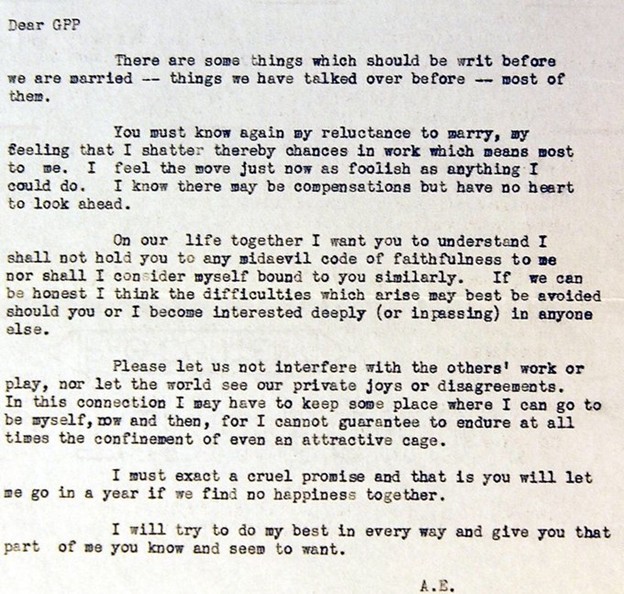
One wonders if George suggested a marriage of convenience to become a power couple and capitalize on her skyrocketing fame and name recognition.
He published her books. She created spectacle and marketed said books. Not that she wasn’t also attractive. But he had to know she wouldn’t be trading her cap and goggles for a baby carriage.
As a lover of typewriters and the nearly lost art of typing a letter, may I take a moment to comment on these BANANAS indentions on the first line of a new paragraph? WTF?
This second letter below shows a little of what she may have been worried about in her first letter. Losing herself to her husband’s identity was not acceptable to her, and the first step was to protect her name and brand.
The Typewriter as a Tool of Defiance
I like to imagine her pounding away furiously on her typewriter—maybe needing 3-4 attempts to get a clean copy as she “asked” to name herself. Boss move for sure. But notice how she softens her message with that little “thanks for the flowers” at the end? You often see little signs of Amelia trying (here and there) to fold herself into a smaller, more pleasing shape for the society in which she moved. Comments to that effect are sprinkled throughout her autobiographical book on women in aviation, The Fun of It. You get the idea that she was aware that being herself was radical enough, and she was willing to make concessions to remain on the right of public opinion. Or perhaps she was simply making the very wise financial decision to be just interesting enough to invest in, but not SO interesting as to scare away those funds.

In the next of this four-part series, we’ll look at some of Amelia’s contemporaries who explored the skies around the same time.


