


Winter feels like the world’s longest practical joke. The sun clocks out early, supplies shrink, shadows stretch, and suddenly everything feels very “Please don’t tap the glass, the humans are hibernating.”
So perhaps it’s no surprise that winter is also the season when cultures across the world conjure up creatures; some delightful, some terrifying, and some strangely helpful, to make sense of the cold months.
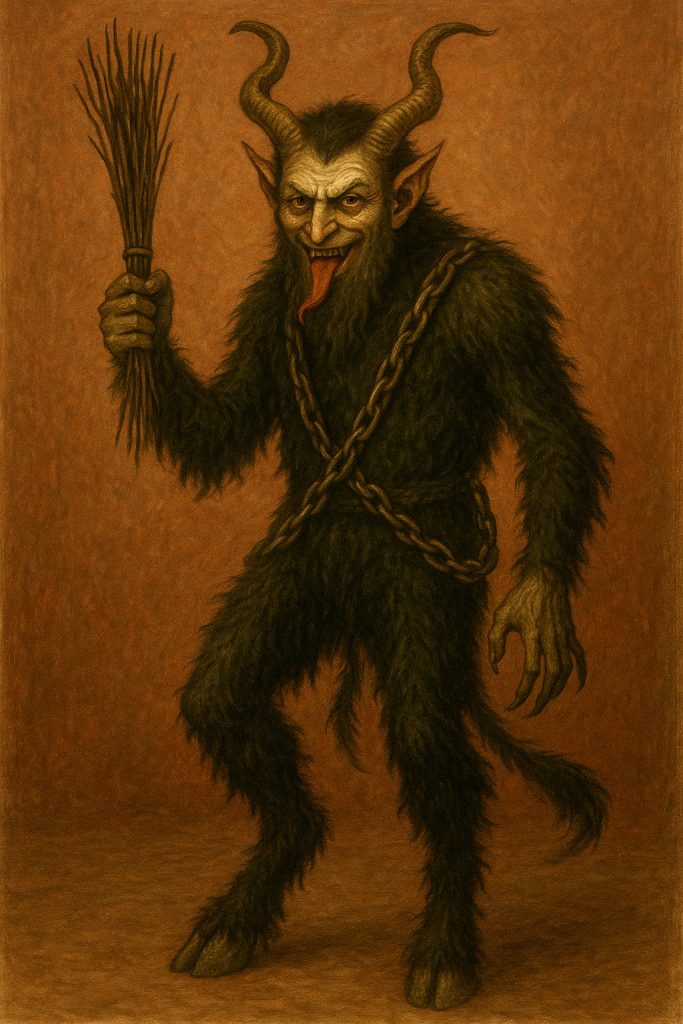
Krampus, everyone’s favorite horned holiday menace, has become the unlikely poster child for this in the United States. Most people know him as “the scary goat-demon who steals the bad kids,” but that’s only half the story. In the Central and Eastern Alps, it’s a buddy-cop arrangement: Saint Nicholas handles the gifts; Krampus handles the consequences.
But the Alpine duo isn’t unique. Winter folklore is full of creatures who coax, command, encourage, bribe, scold, or downright chase people into surviving the cold season. And the reasons behind them are surprisingly practical.
Giving Purpose to Winter’s Harshness
Before central heating, grocery stores, and the warm glow of doomscrolling, winter was… well, lethal. Cold, darkness, hunger, isolation — the whole seasonal package of “try not to perish.”
Folklore stepped in as a kind of emotional instruction manual. By telling stories of creatures who reward preparation and punish slacking, communities taught survival skills with a spoonful of narrative sugar (or terror).
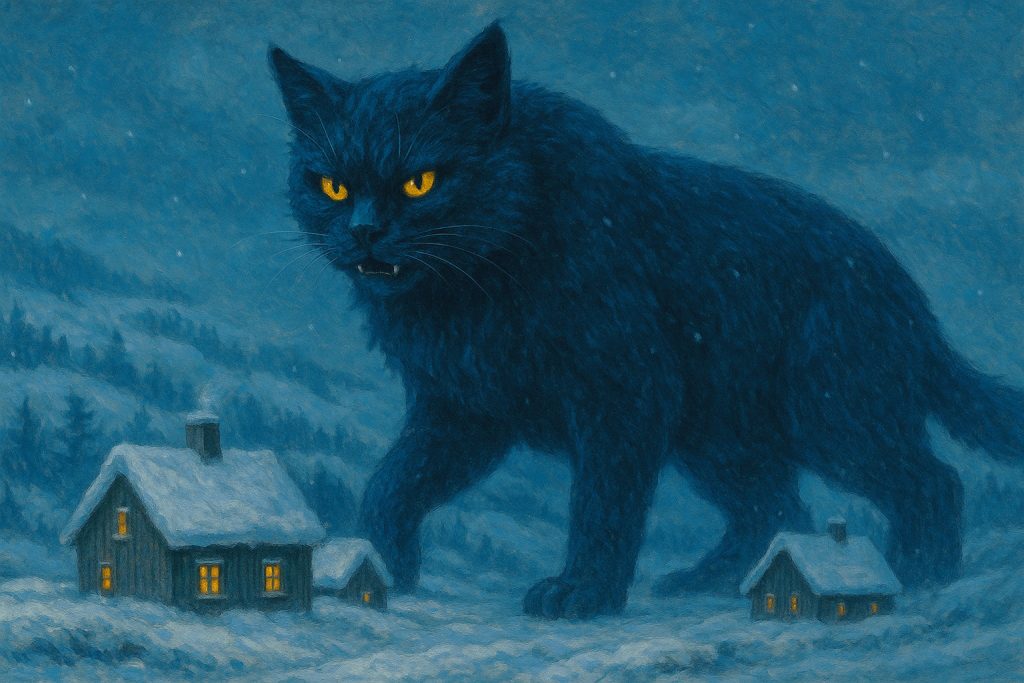
In Iceland, The Yule Cat is not cute. He is enormous, hungry, and extremely judgmental about your wardrobe.
According to tradition, anyone who didn’t receive new clothes before Christmas Eve risked becoming a feline snack.
Harsh? Yes.
Effective? Also yes.
This tale probably served as a practical reminder to ensure that farm-workers finished wool-processing and other hard winter tasks in time to make clothes. Because in winter, slacking doesn’t just mean unfinished socks, it means danger. The Yule Cat is basically a giant, furry metaphor for the season itself.
Behavior Shaming (Or, How to Get Kids to Please Just Behave Already)

Many winter creatures double as walking morality tales. Do good and you get gifts. Do bad and… well…here comes the monster.
It’s the same energy as He sees you when you’re sleeping, he knows when you’re awake — just ratcheted up for pre-modern parenting needs.
Grýla is an ogress who comes down from the mountains to cook and eat naughty children. Charming!
Her sons, the 13 Yule Lads, originally spent the final nights before Yule stealing, harassing, and generally living their best chaotic troll lives.
Over time, they softened: today the Yule Lads leave small gifts (or rotten potatoes, depending on your vibes), and Grýla is mostly relegated to background terror, but the core concept remained: children’s behavior during the long winter mattered.
Blending Old Beliefs with New Celebrations
The Scandinavian Julebukk (Yule Goat) is older than Christmas itself.
Once tied to pagan harvest rituals, Norse mythology, and the last sheaf of grain, the goat symbolized fertility, protection, and winter luck.
Fast-forward a few centuries and now the Yule Goat shows up as a festive straw decoration, a gift-bringer, or the world’s most flame-prone holiday sculpture (looking at you, Gävle Goat).
The creature stays, but the meaning evolves, a cultural fossil dressed up for the season.
Fear, Comfort, and the Need for Tradition
Winter has always been a season of anxieties: long nights, empty larders, unpredictable weather. Imagining spirits and creatures gave people a way to express those fears, and sometimes even control them.
At the same time, over generations, these monsters were softened or adapted for children. What once terrified children into obedience now delights them with storybooks, treats, or holiday mischief.
These creatures become familiar seasonal characters comforting in their predictability, even when they’re a little spooky.
Most importantly, these tales become traditions.
Rituals shared across villages, families, and now entire countries.They’re reminders of where we come from and the people who kept telling these stories long before us. Winter tales aren’t just about reward or punishment, it’s about belonging. They remind us that even the coldest season is full of stories, traditions, and human creativity.
And perhaps that’s the real winter magic: no matter how dark it gets, someone, somewhere, is telling a tale to help the rest of us make it through.


